
Crate Expectations – how much is too much?
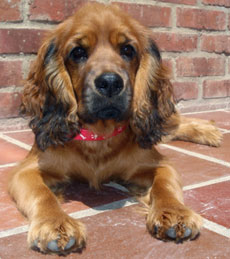 Doreen asks: I have had a 12 week old cocker spaniel for almost 2 weeks. He is doing awesome except for the crate. He will sleep in the crate all night with a minimal of fussing but when I try to put him in it during the day he howls and howls.
I stay at home all day, but am trying to get him used to it for brief periods so hubby and I can actually go out. He is very comfortable with the crate, goes in and out, will bring toys in it, eat in it, etc but as soon as I close that door and try to leave the room the howling and barking begins.
I would appreciate any ideas.
Kingdom of Pets Replies:
Two weeks is not a long time and it may take several more weeks for your youngster to feel comfortable in a crate on his own in the daytime. There are a number of things you can do to help this process.
Teaching your puppy to spend time alone
It is important for your puppy to learn to be comfortable spending time alone for short periods. Not only does it mean you can leave the house without worrying but it will also mean that your puppy will grow into a happy, confident and independent dog that is less likely to suffer from separation anxiety and other problems.
Before Time Alone
Before you leave your puppy for some time alone, make sure he has been to the toilet. Also give him a good walk and a playtime full of exercise – puppies are full of energy and are more likely to enjoy some quiet time alone if they’re tired out and ready for a nap.
The Quiet Space
A crate is like a den. In the wild, dogs dig themselves a den where they can retreat for rest, sleep or to raise pups. It’s small, cozy and represents their special place that’s totally safe. So the use of a small space like a crate fits easily into a dog’s nature. It’s like their private den in your home, rather than the wild open spaces.
Make the crate as comfortable as possible and include a blanket of his to put him at ease, as well as a favorite toy or two to keep him entertained. Provide fresh water in a container which can’t spill - most crates will have a small bucket that attaches on the inside. Make sure that he cannot be harassed by anyone while in there. Initially it may help to drape a blanket over the crate so it is more like a snug den than a room with a view.
Introducing Time Alone
You can gradually overcome your puppy’s panic response by showing him that being in his crate for a while during the day is no big deal.
Start by leaving some of his favorite treats and some toys in the crate, and encouraging him inside to enjoy them there. Close the door gently and leave the room without making a fuss. After a few minutes come back and let him out, again keeping calm and not making a fuss.
Repeat this process through the day, gradually extending the period you are away. Watch for any sign of anxiety or stress but avoid comforting his sad noises or you will reward and reinforce that behavior.
You can use meal times to help build his confidence too. Put his food close to or just inside the crate. Gradually place the bowl further back until he’s eating his meals right at the back of the crate. At first, close the door only while he’s eating, then leave it closed for longer periods. He will soon be comfortable staying in the crate long after his meal.
Things to Avoid
Avoid leaving your puppy in the crate for more than an hour. At this young age your puppy probably can't hold his bladder for too long during the day. You don't want him to get into the habit of relieving himself in his crate, or worse, damaging his bladder from holding on too long.
If you need to leave your puppy for longer, consider asking a friend to come and play with him and let him out to the toilet. Alternatively, set up the crate in a small safe room and leave it open. Have puppy pads or whatever you are using to toilet train your puppy easily accessible in the room along with water and toys.
Dogs are social animals, many with strong working instincts, and need plenty of exercise and attention each day. But these days a lot of dogs can end up with owners more than companions and so lead sad, lonely lives, with just an occasional pat on the head, a bowl of food and a weekly walk. For your dog’s well-being try to find ways around leaving it alone for hours at a time each day while you are out or at work. Consider taking it to play dates at your friend’s or families houses, hiring a dog walker or enrolling your dog in doggy daycare.
No crate?
While a crate is an ideal quiet and safe spot for puppies to spend time alone, if you do not have a crate you can improvise by setting up a comfortable little bed, water, toileting area and toys in a safe small room. Use this room to practice teaching your dog to spend quiet time alone.
All the best,

Daniel Stevens and the Secrets to Dog Training Team
"Secrets to Dog Training - STOP Dog Behavior Problems!"
http://www.kingdomofpets.com/dogobediencetraining/
P.S. Forward this Newsletter to a friend
If you have a friend you think may be interested in training their dog or solving a particular dog behavior problem, please feel free to forward them this Newsletter.
P.P.S. Remember – you have full access to our Members’ Forum
Because you are a Member of ‘Secrets to Dog Training’ you have full access to our Members’ Forum. If you have a dog behavior question or a related problem, you are most welcome to bring it to the Forum. Post a detailed description for our trainers and fellow Members to read. Within 1-4 working days you will see recommendations on how to solve it once and for all.
If you haven’t already registered for the Forum, you can do this from the Members’ Area: http://www.kingdomofpets.com/dogobediencetraining/members/ or you can go straight there by clicking here – http://www.kingdomofpets.com/dog/forum/
Previous Newsletters
01 | 02 | 03 | 04 | 05 | 06 | 07 | 08 | 09 | 10 | 11 | 12 | 13 | 14 | 15 | 16 | 17 | 18 | 19 | 20 | 21 | 22