
Fix Lawn Burn
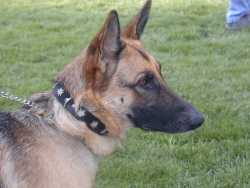 Katy writes: Do you have any suggestions as to what I should feed my female German Shepherd to help with urine burning of grass?
Kingdom of Pets Replies:
When dog urine burns patches in your lawn it really is unsightly and can be expensive to correct, so I can understand your concern. In my experience this problem can be quite hard to manage. And yes, a diet change might be the answer – possibly as simple as drinking more water.
There are many home remedies to correct this problem, but unfortunately most of them are ineffective and some of them actually make the situation worse.
What You Can Try
Identifying the cause
Before you do anything, make sure that your dog really is the culprit. Several lawn diseases will look like lawn burn, with the small, characteristic brown patches.
Firstly - make sure that the brown spots are in areas where your dog urinates. Most dogs will have an area in the yard that they choose to use as the 'bathroom.'
Secondly - check to see if the grass in the brown spots is still firmly attached. Grab a handful and give it a steady pull. If the grass is firmly rooted, then it points to lawn burn. But if the whole bunch of grass pulls up, roots and all, then you may be dealing with a grub problem.
Thirdly - make sure that YOUR dog is in fact the problem. If your neighbor's dog is coming into your yard and urinating it will obviously not do any good to treat your own dog.
Nitrogen is the culprit
Because dog urine is very high in nitrogen, when your dog urinates it is similar to pouring liquid fertilizer on the lawn. A little fertilizer is good for the grass, but an excess causes nitrogen burn. To prevent lawn burn, we reduce the amount of nitrogen coming into contact with the grass.
There are several factors that increase the likelihood of lawn burn.
Female dogs are more likely to cause lawn burn than males because they empty their entire bladder in one location instead of lifting their leg and marking in various spots, as males do.
Large dogs deposit more urine so they increase the quantity of nitrogen in one location, making lawn burn more likely.
Young active dogs, fed a high protein diet, are more likely to produce urine that will burn.
Heavily fertilized yards are already receiving near maximum levels of nitrogen. The small amount of extra nitrogen in dog urine may be all that is needed to put these lawns over the edge and cause lawn burn.
Stressed lawns are more susceptible to damage. Lawns suffering from drought, disease, or newly sodded or seeded lawns are more susceptible to lawn burn too.
Treating and Preventing
1. Saturate the burned areas with water. After your dog urinates, dilute their urine by pouring several cupfuls of water onto the grass. Alternatively water the area with a hose lightly as often as you can manage or put a sprinkler in the area.
2. Feed a high quality dog food that does not exceed the pet's protein requirement. High quality foods contain protein sources that are more completely digested and create less nitrogenous waste in the urine. Talk to your veterinarian about the right diet for your dog. Different dogs require different diets and supermarket diets can be quite ambiguous with their labeling.
3. Encourage your dog to drink more water. This will help dilute their urine and decrease the risk of lawn burn. Small amounts of non-salted broth in the drinking water may help increase your dog's water intake, however it is best to consult your veterinarian before trying this.
4. Train your dog to urinate in a location that is less visible. This approach is very effective for owners who do not want to modify their dogs' diet.
5. Replant your yard with grasses that are more urine-resistant. These tend to be perennial ryegrasses and fescues. The most sensitive tend to be Kentucky bluegrass and Bermuda.
6. Talk to your veterinarian about feeding your dog a supplement like Green-UM or Drs. Foster and Smith Lawn Guard. You could also apply a product to the lawn such as Dogonit Lawn Treatment to bind and neutralize the nitrogen in your pet's urine.
7. If your lawn is stressed, reduce that stress by not over- or under-fertilizing and by providing frequent watering.
8. If neighbors' dogs are causing the problem, you may advise your neighbors of the leash laws. Using a fence or motion-activated sprinkler can help keep dogs from using your lawn.
Hopefully one or more of these measures will return your lawn to its former glory – without imposing too much on your pet’s freedom and enjoyment of the yard.
All the best,

Daniel Stevens and the Secrets to Dog Training Team
"Secrets to Dog Training - STOP Dog Behavior Problems!"
http://www.kingdomofpets.com/dogobediencetraining/
P.S. Forward this Newsletter to a friend
If you have a friend you think may be interested in training their dog or solving a particular dog behavior problem, please feel free to forward them this Newsletter.
P.P.S. Remember – you have full access to our Members’ Forum
Because you are a Member of ‘Secrets to Dog Training’ you have full access to our Members’ Forum. If you have a dog behavior question or a related problem, you are most welcome to bring it to the Forum. Post a detailed description for our trainers and fellow Members to read. Within 1-4 working days you will see recommendations on how to solve it once and for all.
If you haven’t already registered for the Forum, you can do this from the Members’ Area: http://www.kingdomofpets.com/dogobediencetraining/members/ or you can go straight there by clicking here – http://www.kingdomofpets.com/dog/forum/
Previous Newsletters
01 | 02 | 03 | 04 | 05 | 06 | 07 | 08 | 09 | 10 | 11 | 12 | 13 | 14 | 15 | 16 | 17 | 18 | 19 | 20 | 21 | 22 | 23 | 24 | 25 | 26 | 27
28 | 29 | 30 | 31 | 32 | 33 | 34 | 35 | 36 | 37 | 38 | 39 | 40 | 41 | 42